
20+ Years of Experience
ISO 9001 Certified
Locally Based in the Sacred Valley
The Route at a Glance
- Distance
- 48.79 km
- Upis to Pacchanta
- Duration
- 4 days
- 3 nights, camping
- Start
- 4,210 m a.s.l.
- Upis
- Highest point
- 5,165 m a.s.l.
- 16,945 ft · Palomani Pass area
Altitude from the route’s GPS track. Distance measured along the trail.
Trek Highlights
- Cross Palomani Pass at about 5,100 m a.s.l.
- Walk beside glaciers, snow-capped peaks and turquoise lakes.
- Camp in the remote Vilcanota range.
- Soak in the hot springs of Upis and Pacchanta.
Day 1 of 4
Cusco – Upis – Upis Hot Springs
A scenic drive through the Quispicanchis valley, then your first walk toward Ausangate.
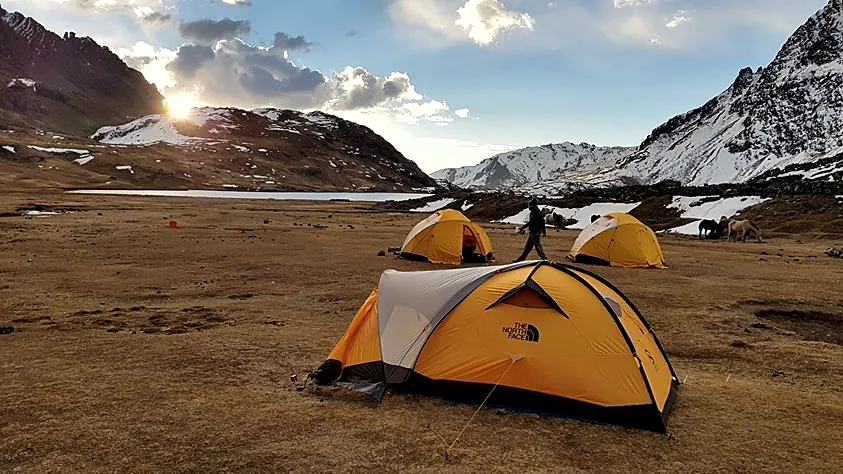
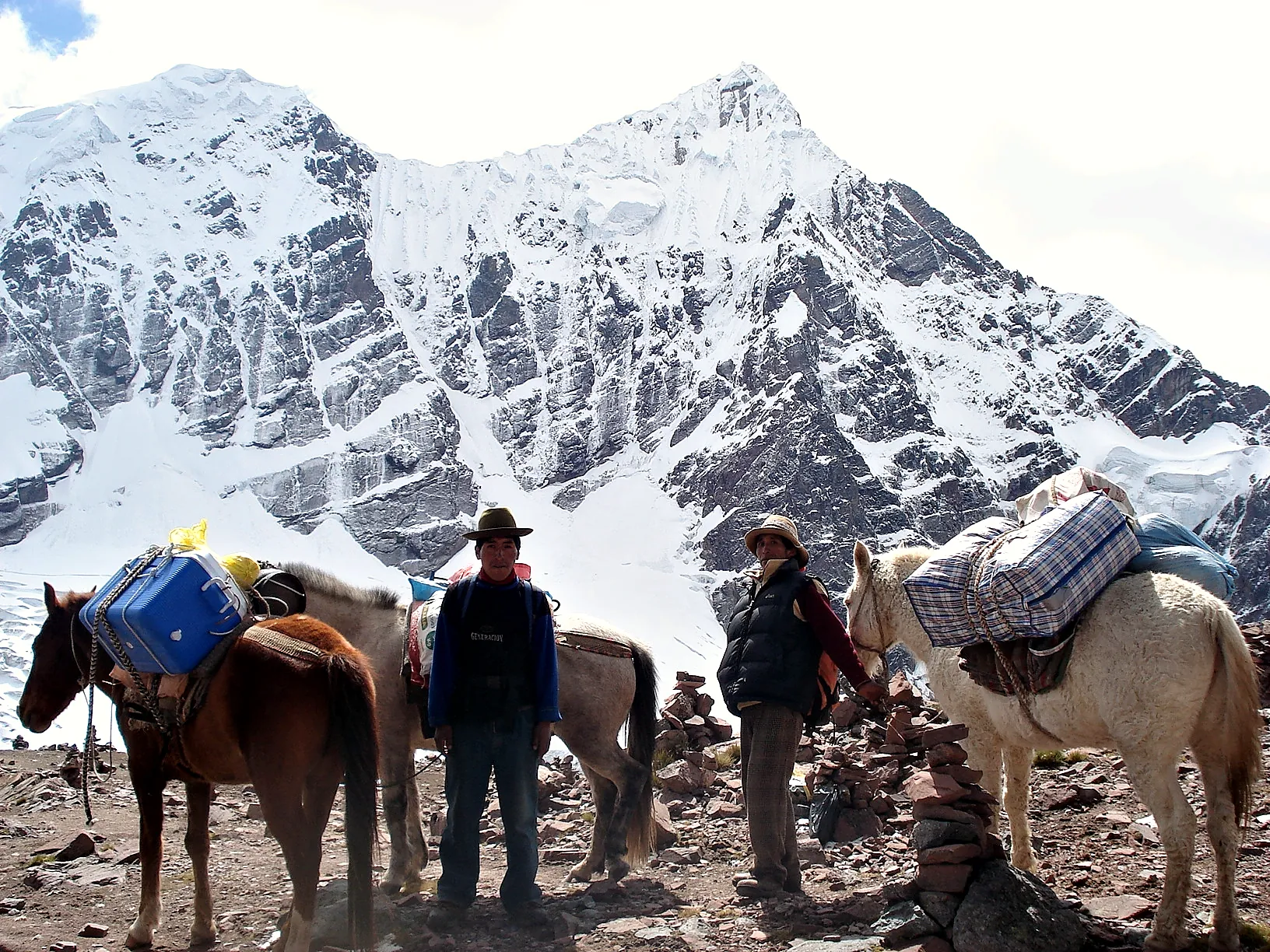
We leave Cusco at about 4:00 a.m. and drive through Urcos and Ocongate to Tinke and Upis, where our muleteers load the mules. From there we walk across puna grasslands and wetlands, with the first views of Apu Ausangate. After about 4 hours we reach our camp at the Upis hot springs, where you can relax in the natural pools in front of the mountains.
Highlights
- Scenic drive through Urcos, Ocongate and Tinke.
- First views of Apu Ausangate.
- Meet our muleteers and team in Upis.
- Soak in the natural hot springs of Upis.
Altitude from the route’s GPS track. Distance measured along the trail.
Day 2 of 4
Upis Hot Springs – Pucacocha – Ausangate Cocha
A day of glacial lakes beneath the snow-capped peaks.
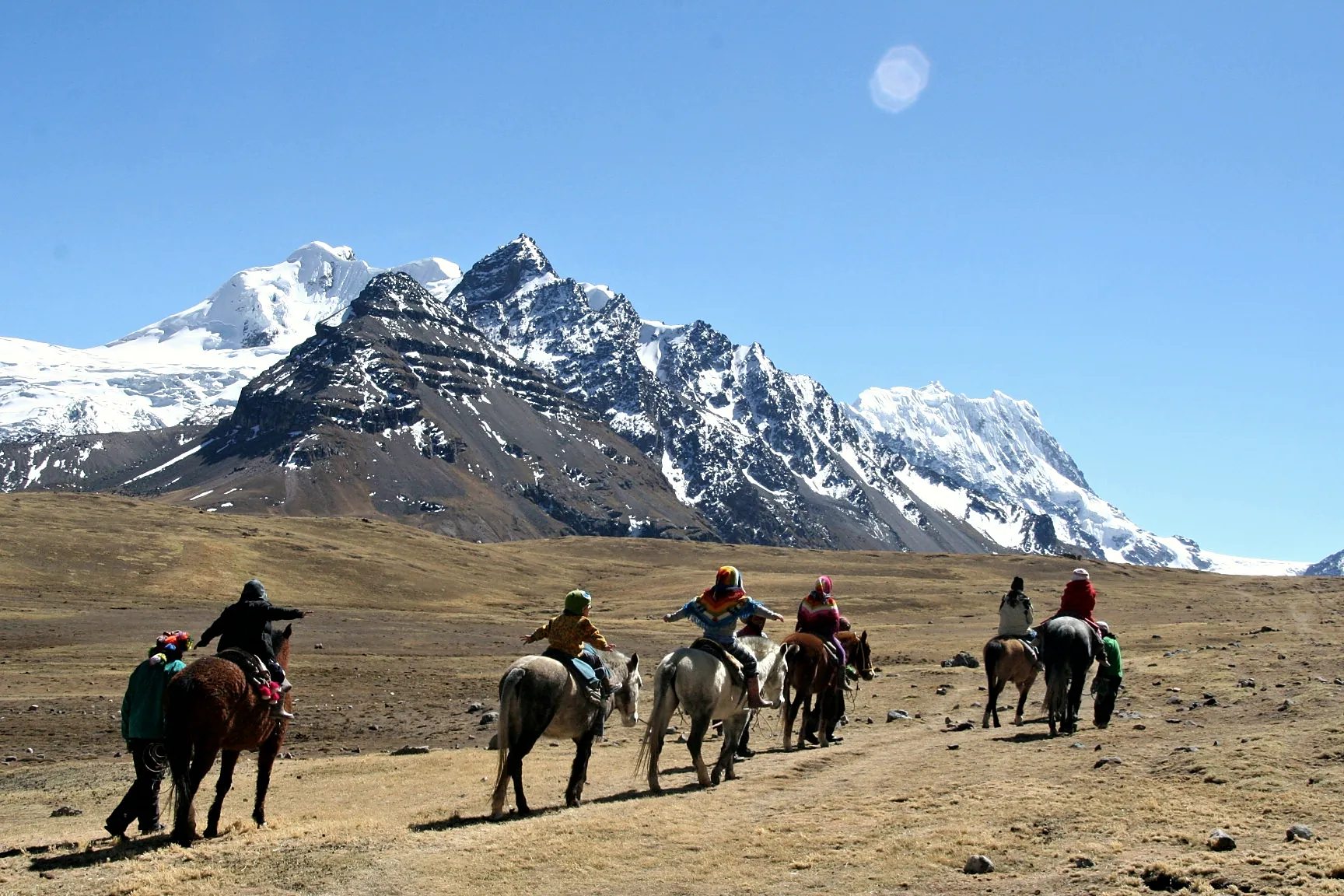
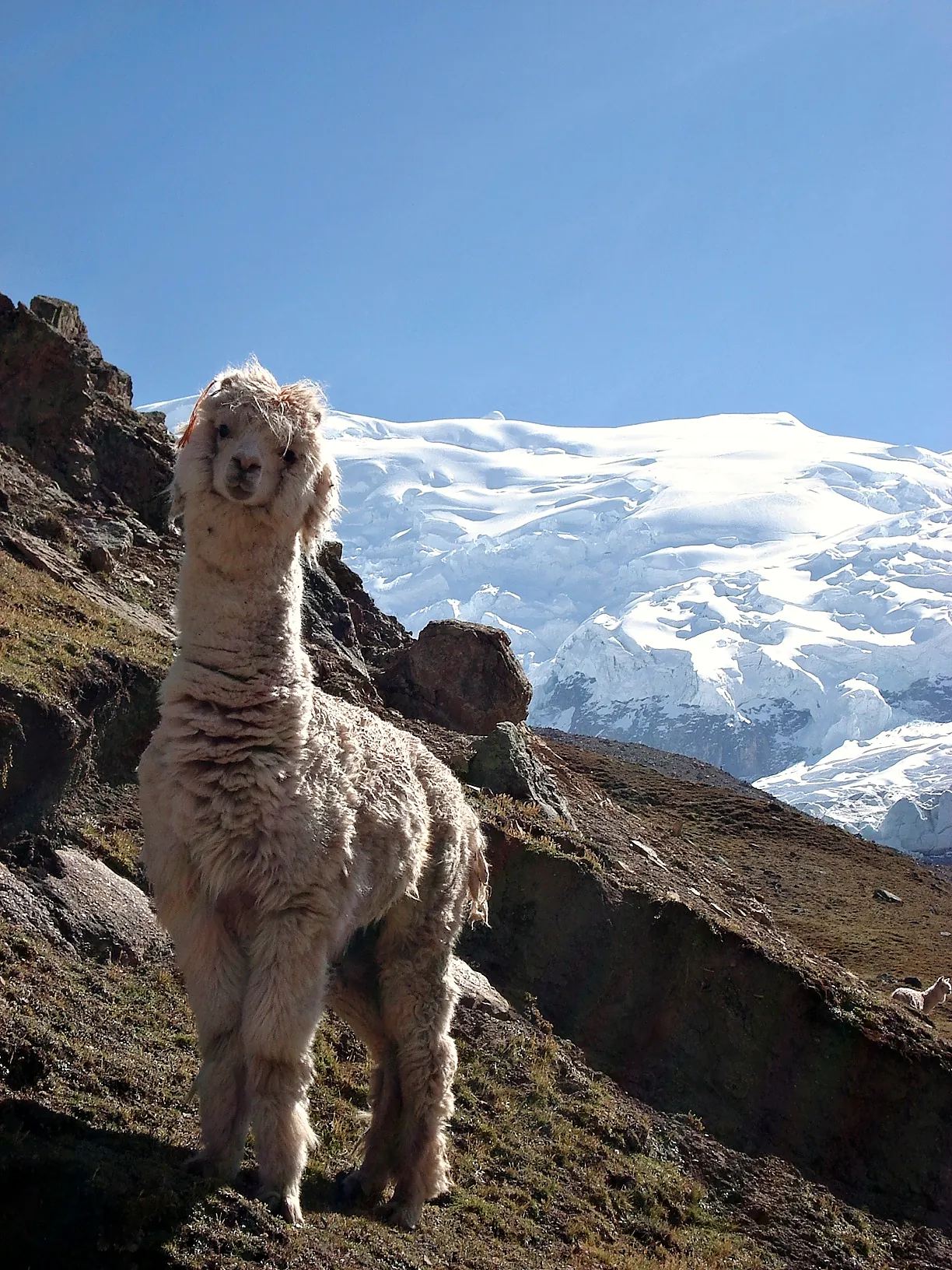
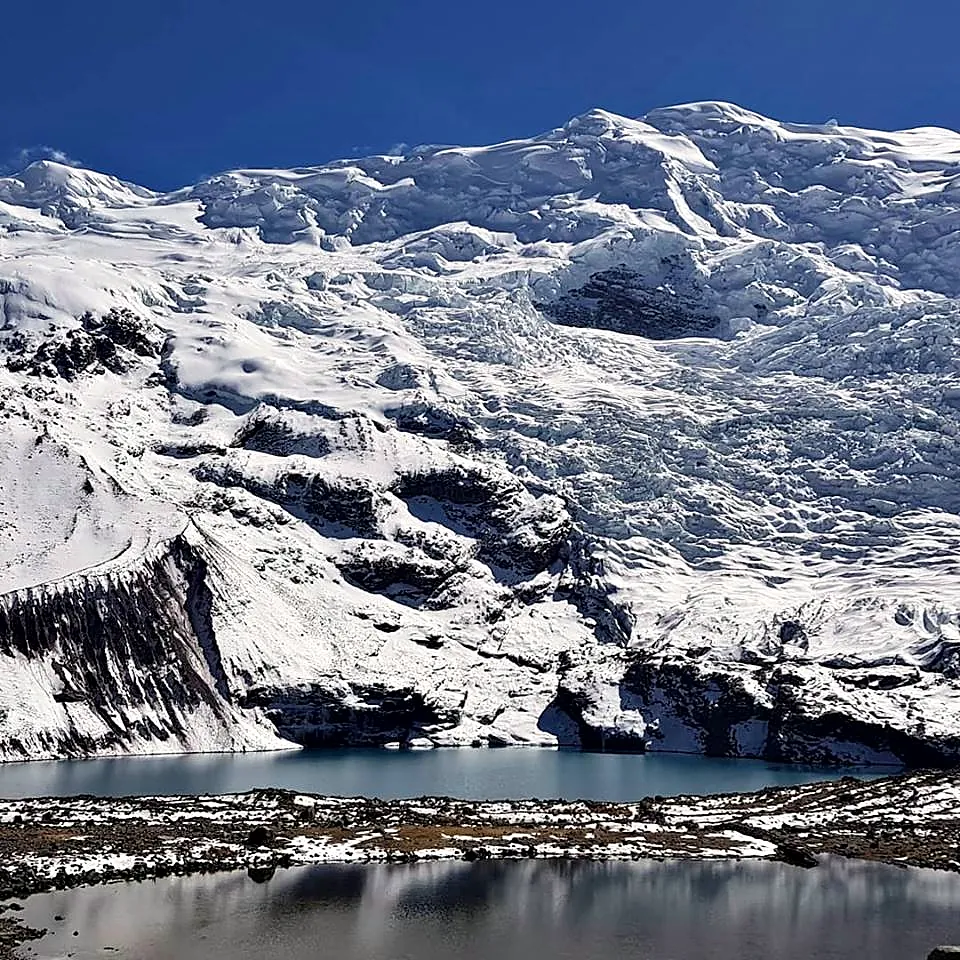
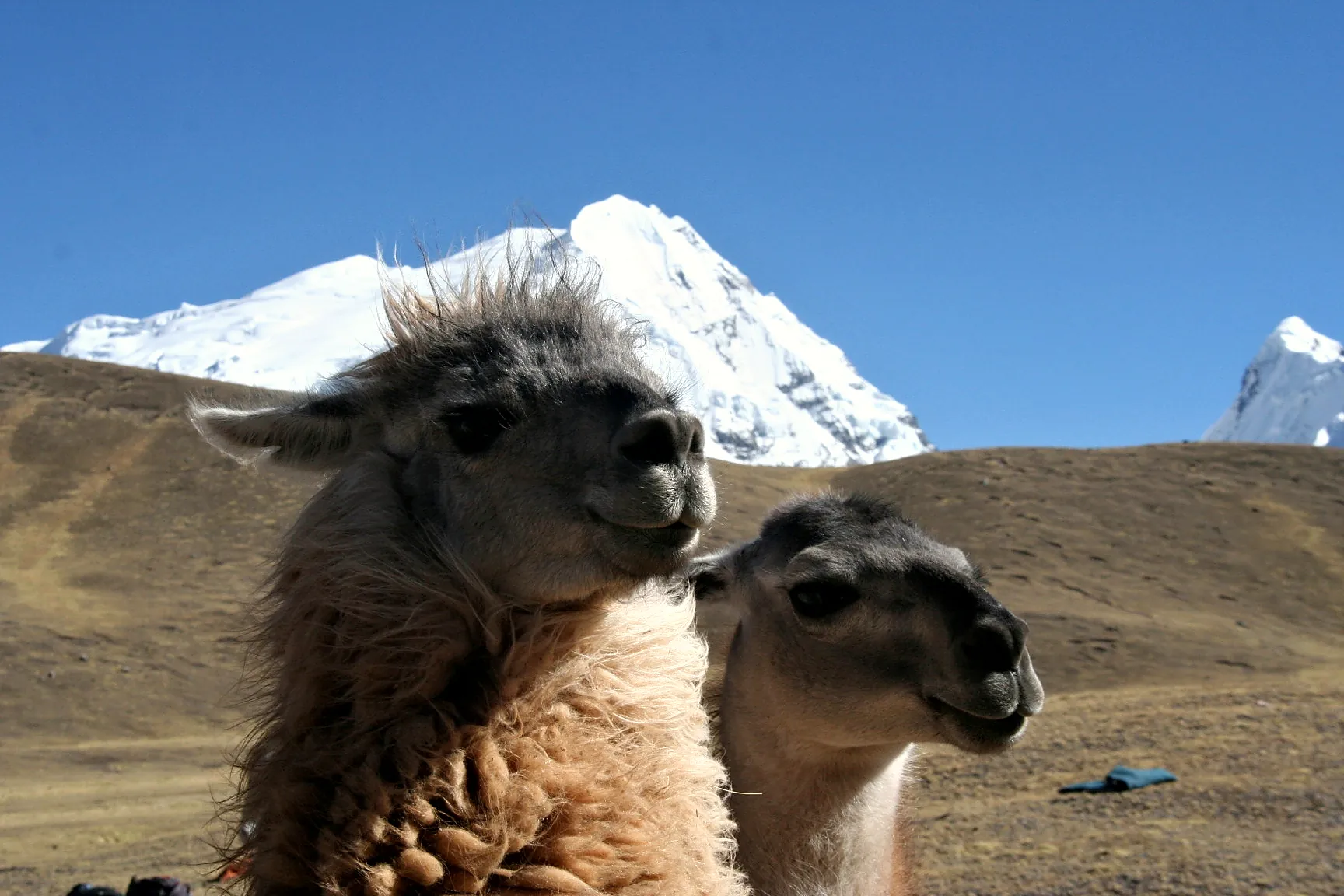
After breakfast we climb gradually along the slopes of the Vilcanota range, then descend toward Pucacocha, where glacial lakes contrast with dark mountains and the snow of Ausangate. After lunch we continue past lakes, wetlands and mountains to our camp at Pucacocha or Ausangate Cocha, depending on trail conditions. Alpacas and llamas are common, and with luck you may see vicuñas and high-Andean birds.
Highlights
- Gradual climb along the Vilcanota range.
- Glacial lakes of Pucacocha.
- Alpacas, llamas and, with luck, vicuñas.
- Camp with views of Ausangate.
Altitude from the route’s GPS track. Distance measured along the trail.
Day 3 of 4
Ausangate Cocha – Palomani Pass – Jampa
The hardest day and the highest point of the trek.
We start early after breakfast and climb steadily to Palomani Pass, at about 5,100 m a.s.l., the highest point of the route. Vegetation fades and the landscape turns to high mountain. From the pass you can see the Vilcanota range, its glaciers, valleys and wide high-Andean plains. After a pause we descend into a landscape of valleys, reddish mountains and wetlands, continue to Huchuy Phinaya, where herding families raise alpacas and llamas, and after lunch walk the valley with constant ups and downs to our camp at Jampa.
Highlights
- Reach Palomani Pass at about 5,100 m a.s.l.
- Panoramic views of the Vilcanota range and its glaciers.
- Walk through Huchuy Phinaya, a herding community.
- Camp at Jampa under a star-filled sky, weather permitting.
Altitude from the route’s GPS track. Distance measured along the trail.
Day 4 of 4
Jampa – Pacchanta – Cusco
The last pass, the hot springs and the drive back to Cusco.
After breakfast we leave camp and walk the Jampa valley, among mountains and wide pampas where herds of alpacas and llamas graze. We climb to the last pass of the route, then descend toward Pachaspata and Q’omercocha, past turquoise lakes and green wetlands, and continue gradually to Pacchanta, at the foot of Apu Ausangate. After lunch, and if time and conditions allow a soak in the Pacchanta hot springs, we say goodbye to the trekking team and take our private transport back to Cusco, arriving in the afternoon or early evening.
Highlights
- Cross the last pass of the route.
- Turquoise lakes and green wetlands near Q’omercocha.
- Pacchanta hot springs, if time allows.
- Private transport back to Cusco.
Altitude from the route’s GPS track. Distance measured along the trail.
Pack light
What to bring
The bag you carry yourself while walking. Camping equipment is normally carried by the trekking crew.
Sun and rain
- Hat
- Sunscreen
- Waterproof poncho
- Jacket
- Insect repellent (minimum 20%)
Daypack essentials
- Water (non-disposable bottle)
- Snacks
- Toilet paper and wet wipes
- Headlamp or flashlight
Documents and health
- Documents (ID)
- Personal medication
Camera and power
- Camera / phone
- Power bank
Bring cash in soles and/or US$ (there are no ATMs on the route). Our mules carry your large backpack, up to 6 kg.
On the trail
Food and dietary needs
Vegetarian options are available on the Ausangate trek. Vegan, gluten-free and dairy-free meals are available on request with advance notice. Please tell us about any food allergies when you book, so we can confirm what we can arrange for you.
Traveling responsibly
We buy local products whenever we can, to support the local economy. On the trail we take care to recycle, reuse and avoid single-use plastic.
Our muleteers and mules
On this trek our muleteers carry the camping equipment and your large backpack with pack mules. They work under the same conditions as our porters on other treks, except for the 20 kg weight limit that applies to porters:
- Food: meals provided throughout the trek.
- Equipment: uniform provided.
- Animal care: load protectors on every mule.
- Shelter: accommodation for all our staff.
That is why your large backpack is limited to 6 kg (13 lb).
Tripadvisor · 2026 Reviews
What Our Travelers Say
Recent Tripadvisor reviews of Santu trips in Peru, posted in 2026.
This is Santu’s overall rating, not a rating specific to the Ausangate trek.
“The experience was incredible; we were 3 families and we loved it. The level of food, the tents, the guides. A ten.”
“… Giuliana exceeded our expectations. She did an amazing job listening to our wants/needs, make recommendations and take care of all the steps along the way. We felt fully informed.”
“Giuliana who is an amazing travel agent who planned everything for Us and give us lots of great ideas and she came with an amazing package that it took care of all our needs …”